Deadlocks vs Hook Locks vs Slamlocks: Which Is Best for Your Van?
No single van lock is universally best. The right answer depends on the van, which door you're protecting, how you use the vehicle day to day, and the attack method thieves are actually using on that model.
Deadlocks, hook locks and slamlocks are all independent mechanical locks, separate from a van's factory central locking — but they are not interchangeable, and choosing the wrong one for how you actually use the van can leave you with a lock you never engage, or one that gives less protection than you think.
What is a van deadlock?
A van deadlock is an optional additional lock, operated by key, that is completely separate from the vehicle's original factory locking system. It is only engaged when you choose to use it — typically overnight, or whenever the van is left somewhere vulnerable — which is why it suits tradesmen who are in and out of the van all day and don't want an extra lock engaged every single time.
This is especially relevant given electronic hacks, remote signal jamming, key cloning and relay attacks: no matter how sophisticated a thief's tools are, they will not manage to electronically unlock a manual key-operated deadlock.
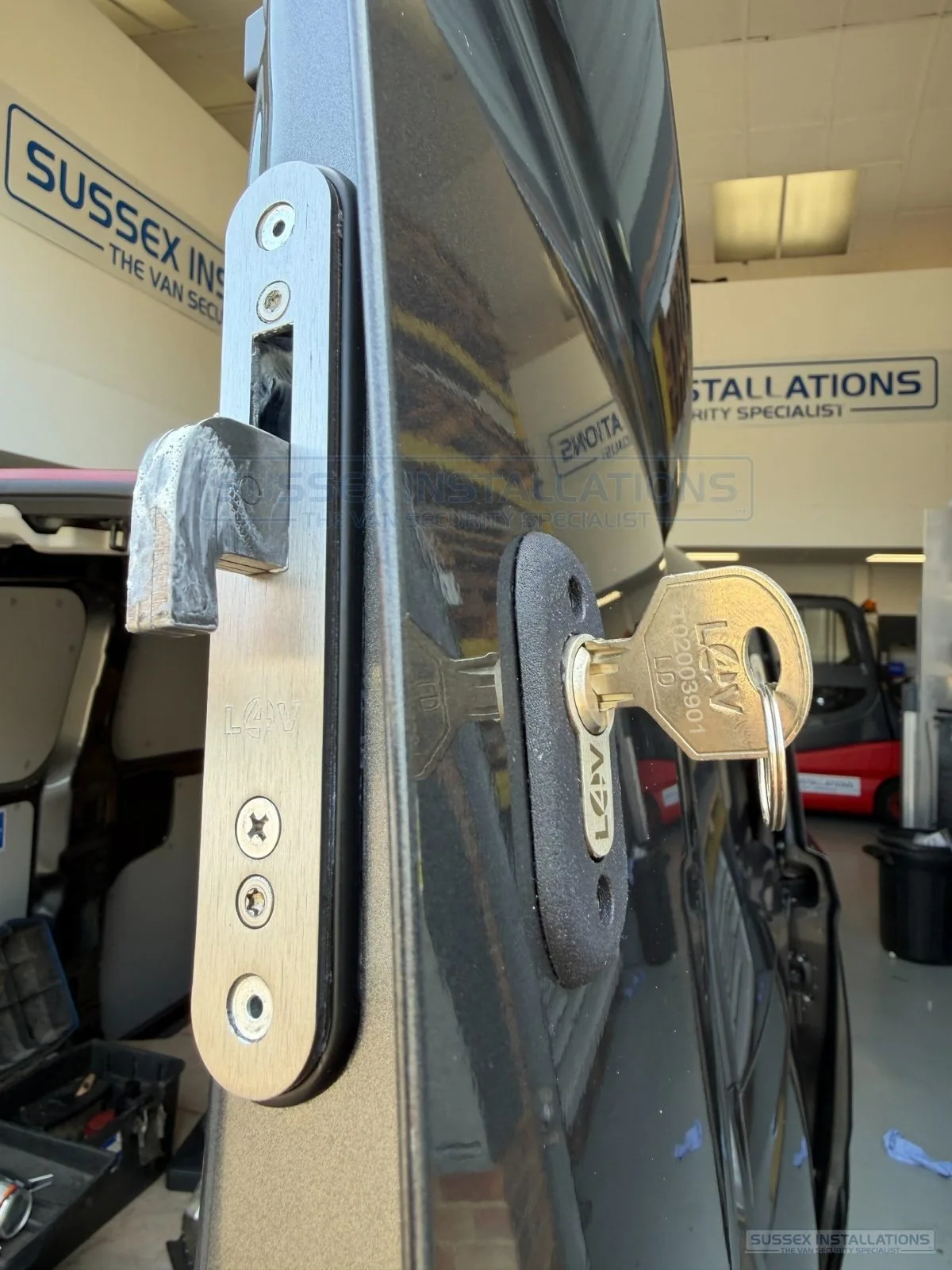
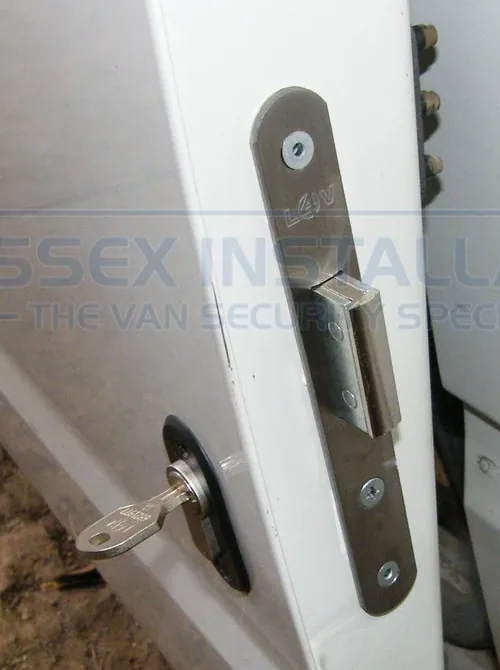
A T-series van deadlock, fitted independently of the factory locking system.
What is a hook lock?
A hook lock uses a hook-shaped bolt that engages into a receiving bracket, giving a strong additional mechanical locking point on suitable side and rear load doors. In practice, a hook lock is a type of deadlock: it is manual, key-operated and independent of the factory locking, differing mainly in the shape of the bolt and keep rather than in how it's used. Some products on the market are described as a hooklock deadlock rather than sold as two distinct categories, which is why the terms are often used together. This makes a hook lock the better choice specifically for a sliding or side load door: hook-type deadlocks offer improved resistance to levering attacks on sliding doors because of their engagement geometry, where the hook throws behind the keep rather than a straight bolt simply meeting it.
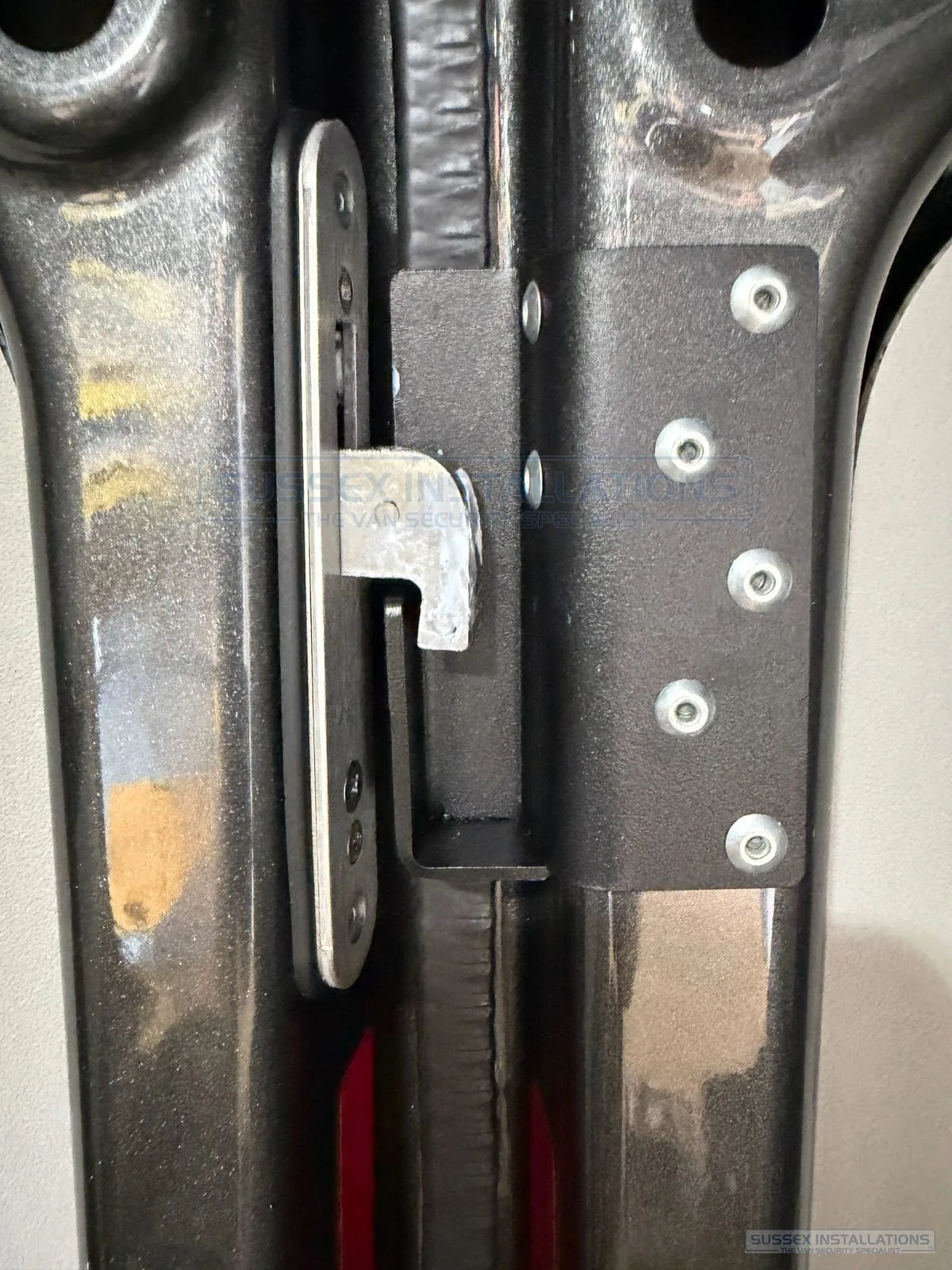
A fitted hooklock deadlock — the hook-shaped bolt gives it its name.The hook throws behind the keep fitted to the opposing door or van body, giving anti-spreading security by hooking behind the bracket rather than simply butting against it.
What is a van slamlock?
A slamlock locks automatically the instant the door closes, with no key needed. That's genuinely useful for a multi-drop courier who needs to grab a parcel and kick the door shut, but it comes with a real trade-off: on its own, a slamlock might not give you any more security than the van's original manufacturer locking.
As far as adding extra security goes, slamlocks were relatively useful in the past, when thieves were attacking the lock/unlock mechanism inside the doors. But once attack methods changed to thieves attacking latches directly from 2018 onwards, the additional security a slamlock gives over the van simply being locked by pressing the button on the factory remote has become zero benefit in many cases — the main benefit that remains is that the van is not left completely unlocked.
It also carries a specific risk on the wrong vehicle. On a campervan or motorhome, for example, the owner could be camping away from home, step outside while the wind blows the door shut, and end up locked out with everything inside — a slamlock automatically engaging is the last thing a leisure vehicle owner wants.
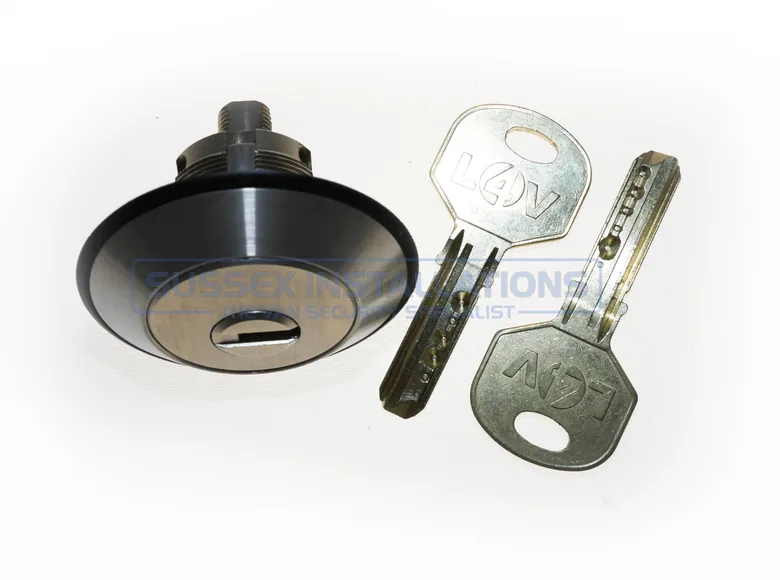
A slamlock cylinder and matching keys.
Deadlock vs hook lock vs slamlock at a glance
Lock type
Locking method
Best suited for
Watch out for
Deadlock
Manual, key-operated
Tradesmen, campervan and most people who want additional security, where hook locks are unavailable or unsuitable.
Only protects when you remember to engage it
Hook lock
Manual, key-operated (hook-shaped bolt)
Tradesmen, campervan and most people who want additional security — preferred over a deadlock where available and suitable for the door.
Functionally a deadlock variant — check exactly what a "hooklock deadlock" product includes
Slamlock
Automatic on door closing
Multi-drop couriers who need to lock up quickly, repeatedly
Alone, may add no more security than the factory locking; risks locking leisure-vehicle owners out
Can different lock types be combined?
Yes. A slamlock can be combined with deadlocks or hooklocks as well as externally fitted shields and additional internal plates guarding the latch mechanism, giving the convenience of automatic locking alongside overnight-level security. There is also the slamplate or slam handle option, where the weak original plastic handle is replaced entirely with a solid metal plate that has the slamlock built into it.
The same layering logic applies to deadlocks and hook locks: they are frequently fitted alongside a Stealth Shield protecting the factory latch itself, since the two products do different jobs. Real-world evidence bears this out — on one Ford Custom fitted with a deadlock but no shield, thieves got past the deadlock and broke in through the latch. On a comparable van fitted with both a deadlock and a Stealth Shield, the thieves snapped the barrel and cut a hole to the latch, but did not get in.
As a general recommendation, deadlocks or hook locks should be fitted to at least all load area doors — typically the side load door and rear barn doors — when there is a full bulkhead separating the load area from the cab. Cab-area deadlocks or hook locks are typically fitted as well when there isn't a full metal bulkhead, or when the van owner wants to protect the van itself from being stolen, not just its contents. Real installations reflect this: one customer's Mercedes Sprinter camper had deadlocks and protective ProPlates fitted to the cab door, offside loading door and rear barn doors, while another installation covered the front cab doors, side load door and rear barn doors.
Kombi-style vans add a further variation: where a row of rear passenger seats is accessed via the side load doors, with a full bulkhead fitted behind those seats, the cargo or rear tool storage area is reduced to a smaller space accessed only through the rear barn doors or tailgate. In that case, van owners may only need to add deadlocks to the rear barn doors or tailgate, since the side load doors no longer give access to the load area. Jeff explains a real example of this approach on Roger Bisby's own kombi-style van: rather than spending money protecting the other doors of the van, which were effectively passenger areas, we doubled up the deadlocks on the rear doors and added an internal Stealth Shield, giving maximum security to just the rear load area.
Which single door matters most differs by van model, because that's where each manufacturer's own weak point sits. On the Ford Custom, the side load door latch is the point currently being targeted. On the Renault Trafic, Vauxhall Vivaro, Nissan NV300 and Fiat Talento, rear-door hole attacks have been the more common route in. Identifying your specific van's weak point, and protecting that first, matters more than assuming every door needs identical treatment.
Can I fit deadlocks, hook locks or slamlocks myself?
Kits can be purchased, but correct fitting involves permanently altering the van's doors and bodywork by drilling and cutting holes, and requires accurate positioning, precise alignment, a proper clean-down to clear metal filings, and corrosion protection on the newly exposed bare metal. An inexperienced fitter may not be able to cut the correct shape hole, which is why professional installation is generally recommended for these products.
This is a different position to the one we take on security shields, which are designed with the installer in mind and are widely regarded as among the easiest security products to fit yourself.
Yes, deadlocks are a visible deterrent, but you'll never actually know how many times thieves have driven past a van with deadlocks fitted and gone on to break into an easier target instead — though this does happen many times over a van's lifetime with deadlocks fitted. Often the first layer of security is to fit covert Stealth Shields inside the door to protect the factory latch / locking unit, with deadlocks added as an additional layer of security. A high-position deadlock can also function as an additional securing point, which combined with a peel and steal bracket can make door-folding attacks far more difficult.
What is the difference between a van deadlock and a hook lock?
Both are manual, key-operated locks that are completely independent of the van's factory central locking. A standard deadlock uses a straight bolt; a hook lock uses a hook-shaped bolt that engages into a receiving bracket, which can give a stronger physical hold on suitable side and rear load doors. When fitted correctly and properly aligned with the opposing keep, a hook-style deadlock also offers resistance to door-spreading attacks, since the hook engages behind the bracket rather than simply butting against it. In practice a hook lock is a type of deadlock, and some products are sold and described as a hooklock deadlock rather than as two separate categories.
What is the difference between a van deadlock and a slamlock?
A van deadlock is an optional extra lock that you activate yourself, typically overnight or in a vulnerable spot, so it suits tradesmen who are in and out of the van all day and don't want an extra lock engaged every single time. A van slamlock locks automatically the moment the door shuts, which is handy for a multi-drop courier who needs to grab a parcel and kick the door closed, but on its own a van slamlock might not actually give you any more security than the van's original manufacturer locking.
Which lock is best for a van used by a tradesperson?
A deadlock or hook lock is usually the better fit, since it is only engaged when you choose to use it, such as overnight or when the van is left unattended, rather than adding a step every time tools are loaded and unloaded through the day.
Which lock is best for a multi-drop courier van?
A slamlock is often chosen for multi-drop work because it locks automatically the instant the door is closed, without needing a key. A courier's real vulnerability window is usually when the van is left unlocked between drops rather than when it is locked, so a slamlock alone should not be assumed to give more security than the vehicle's original locking, and is often combined with an external plate or shield for extra protection.
Which lock is best for a van's sliding door?
A hook-style deadlock is generally the better choice for a sliding or side load door. Hook-type deadlocks offer improved resistance to levering attacks on sliding doors because of their engagement geometry — the hook throws behind the keep rather than a straight bolt simply meeting it, which is the same mechanism that gives correctly aligned hook locks their resistance to door-spreading attacks generally.
Which doors on a van need additional locks?
As a general recommendation, deadlocks or hook locks should be fitted to at least all load area doors, typically the side load door and rear barn doors, when there is a full bulkhead separating the load area from the cab. Cab-area deadlocks or hook locks are typically fitted as well when there isn't a full metal bulkhead, or when the van owner wants to protect the van itself from being stolen, not just its contents. Which single door is most vulnerable differs by van model, so the right combination depends on identifying that model's actual weak point rather than treating every van the same way.
Can I fit deadlocks, hook locks or slamlocks myself?
Yes, they can, and kits can be purchased, but fitting deadlocks to a van is considerably more difficult than fitting Stealth covert internal door shielding or external shielding. It involves cutting the van using a reciprocating saw to the correct shape for the lockcase, and the barrel hole needs to be cut in the correct place on the outside skin so that it aligns with the lockcase, with the keep then fitted to the other van door or van bodywork in the correct place so that the lock functions correctly. Add to that the need to remove the parts to perform the clean-down and rust protection before refitting them, and it's a job that takes time to learn and get the hang of, so you risk wasting time and potentially cutting holes in the wrong place on your van, or scratching it. Best advice is to start by fitting Stealth shields inside the door; if that goes well, try the external shields; and if you're still keen, take on deadlocks as the next challenge, which will be around twice as difficult again.
How much does a deadlock or hook lock cost?
A single deadlock or hook lock fitted starts at £141+VAT, or as little as £133+VAT per lock when having 4 fitted together. These prices are based on mobile fitting in East Sussex or at our Eastbourne workshop; mobile fitting further afield may include additional travel costs, and some high-position kits need a metal mounting box for the lock case, which can affect the price. See our Sussex, London, Kent or Surrey installation pages for area-specific pricing.
Does having a deadlock or hook lock fitted invalidate my van's warranty?
It's important that the installer carries out a thorough clean-down and rust prevention process when fitting these locks, to avoid corrosion. Whilst it's possible that a manufacturer could question a related warranty issue, such as corrosion near a deadlock, we have fitted over 23,000 deadlocks and slamlocks over two decades and have never had a single customer report a warranty problem as a result of us fitting deadlocks to their van.
Should locks be combined with van security shields?
Often, yes. Deadlocks, hook locks and slamlocks add an independent mechanical locking point, while a shield protects the factory latch itself from being attacked directly. Real-world evidence from vans with only a deadlock fitted, compared with vans that had a deadlock and a Stealth Shield fitted together, shows the combination stopping break-ins that a lock alone did not.
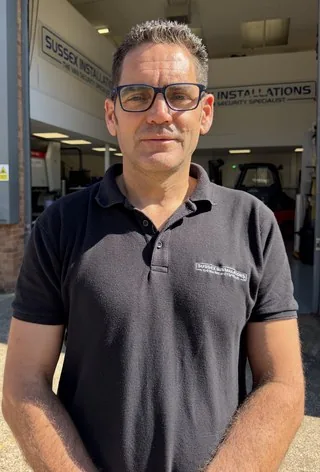
Jeff Scott — Van Security Specialist and Industry Educator
Jeff Scott is the founder of Sussex Installation Team Ltd (Sussex Installations). He has fitted vehicle-security systems since 1997, started Sussex Installations in 2003 and has specialised in van security since 2008. His work combines installation, vulnerability research, product design, UK manufacturing and long-term public education.
In 2009, Jeff published the first known YouTube video explaining mechanical key-operated van deadlocks. He has continued documenting van-security products, installation standards, vehicle vulnerabilities and changing attack methods ever since – earning his description as "The OG Van Security YouTuber."
Jeff has supported thousands of professional vehicle aftermarket technicians across the UK and beyond with access to technical information, while actively promoting higher quality installation standards through his trade community ifitstuff.com since 2006.
Each page preserves the original description, historical context and the full available transcript.
Jan 4, 2014
Van security DEADLOCKS? SLAMLOCKS? Or ARMAPLATE?
A 2014 explainer on the differences between the main types of van lock and which security suits which van, including why slamlocks can be the wrong choice for a campervan.
The video that began Jeff Scott's public van-security education — the first known video explaining what a manual key-operated van deadlock is and how it works.