
Historical product context
Deadlocks, Slamlocks or Armaplate?
An early explanation of the different jobs performed by independent locks and protection around a manufacturer's vulnerable locking area.
Open video and transcript →
What a useful early shield taught me about matching products to real attacks, designing for the installer and making instructions part of the product.
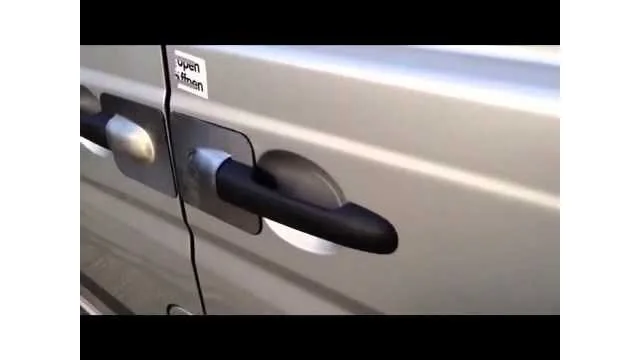
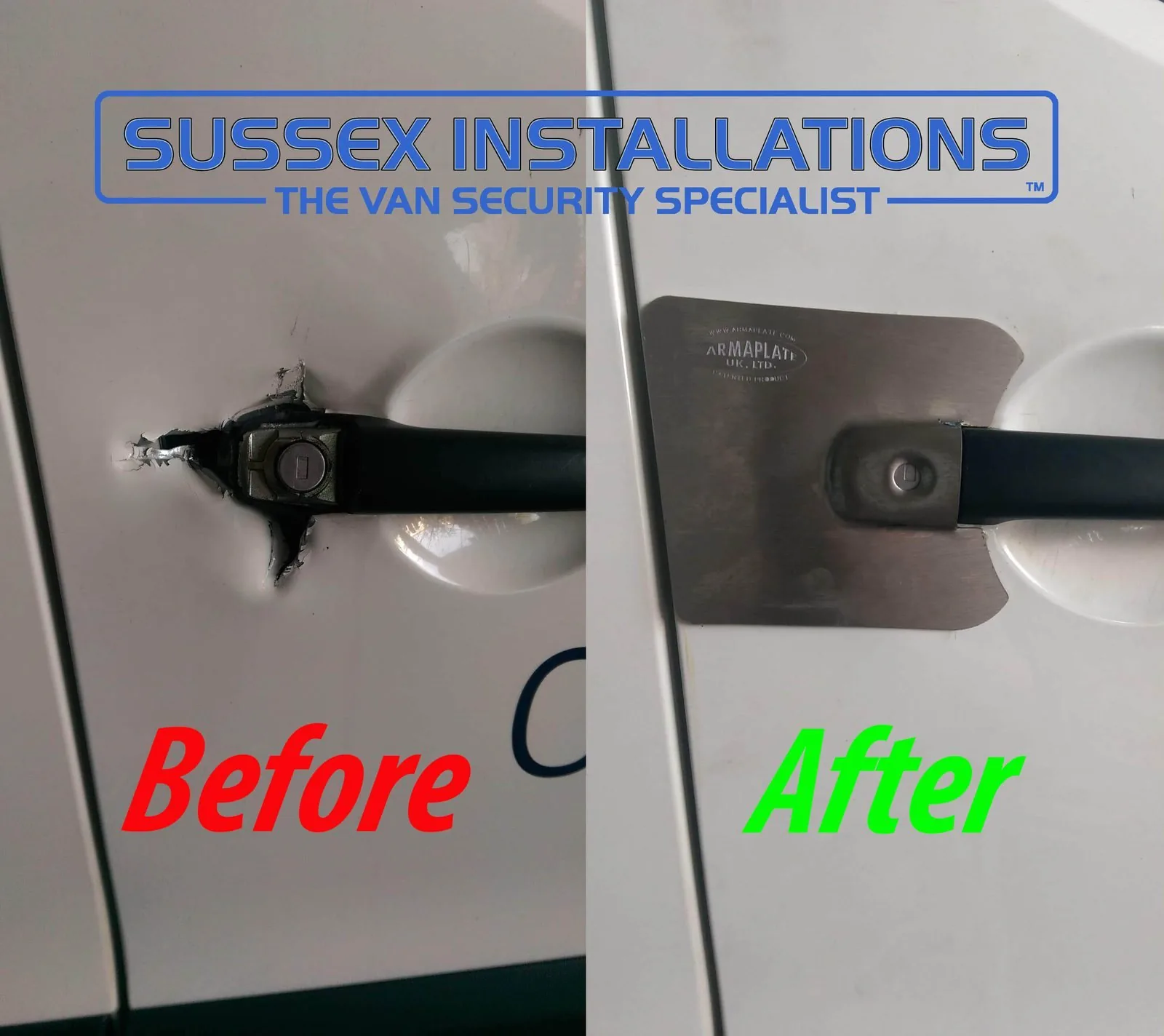
Armaplate products were useful on vehicles such as the Mercedes Sprinter from 1996 to 2017 and Mercedes Vito models before 2015. At that time thieves commonly pushed a screwdriver between the door handle and the van bodywork to reach the locking mechanism. A correctly selected external stainless-steel plate could reinforce the area being attacked.
Fleets became familiar with Armaplate and often specified the product again when replacing their vans. The important lesson, however, was that a familiar product should not automatically be carried forward when the vehicle and the attack method had changed.

By around 2016, Ford Transit Custom and Transit MK8 vans were being attacked through the driver's door barrel. Thieves then evolved towards attacking latches directly, sometimes far away from the handles. In my opinion, the market did not adapt quickly enough. Handle shields continued to be developed and fitted to doors where they often added little or no protection against the attack actually taking place.
I found it frustrating to see a customer's security budget spent on a visible product that did not address the relevant weakness, when the same money could have been used for another layer that added real value.
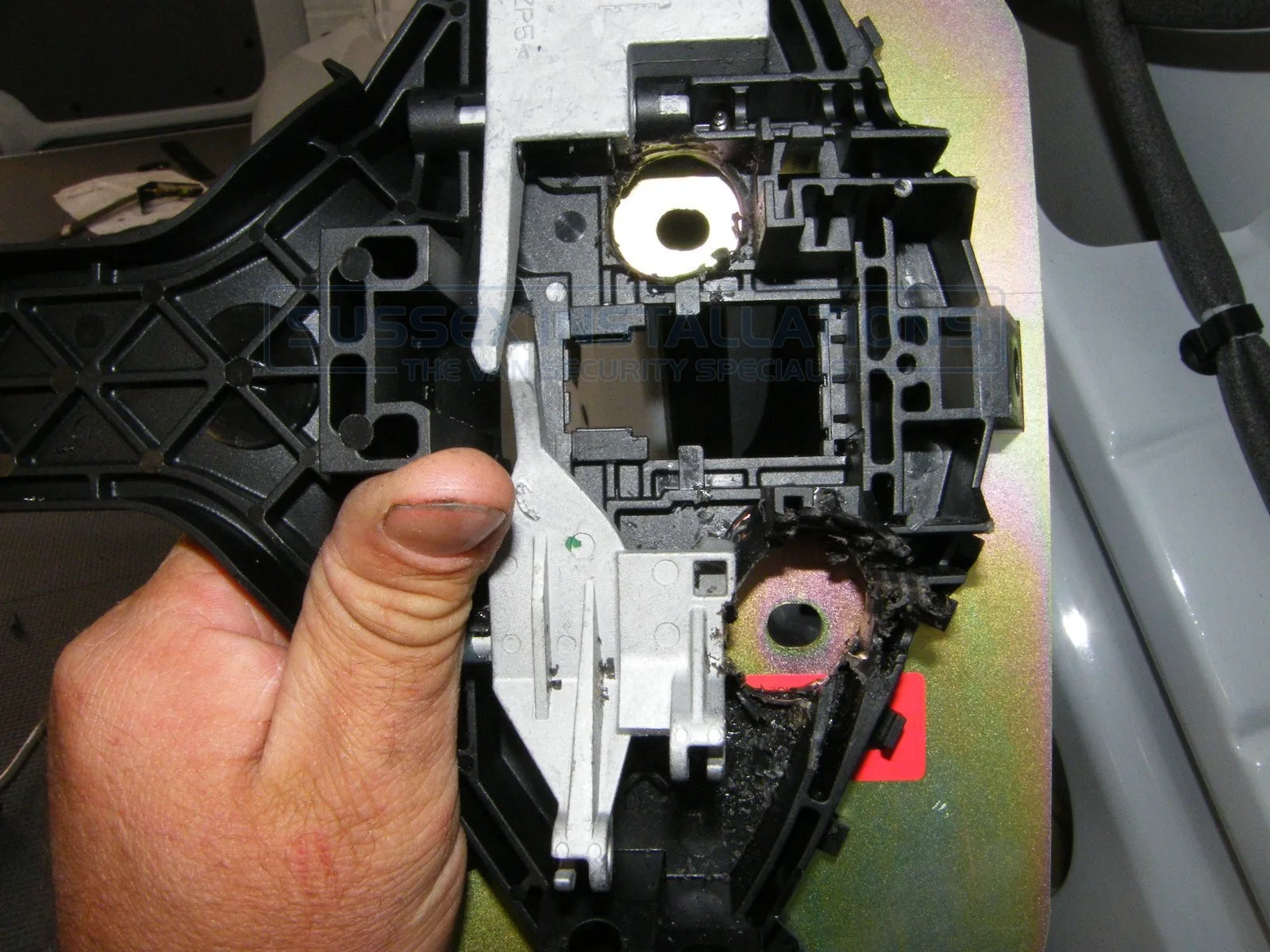
Armaplate also became my clearest example of why product development must consider the installer. On some products the studs sat unnecessarily close to the edge of the plate, leaving very little tolerance and a real risk of an inaccurately drilled hole remaining visible. Some stud positions were difficult to reach, were close to cables or wiring, or required internal handle components to be removed and drilled simply to gain access to the fixing nuts.
Oversized gaskets could bulge beyond the edge of the shield. Products were supplied without the detailed fitting instructions I believed installers needed. I spoke to Armaplate on multiple occasions and asked for instructions. I remember being told there was no time to produce them because the company was too busy with product development. That stayed with me: every installer then had to spend time rediscovering the method and the hazards for themselves.
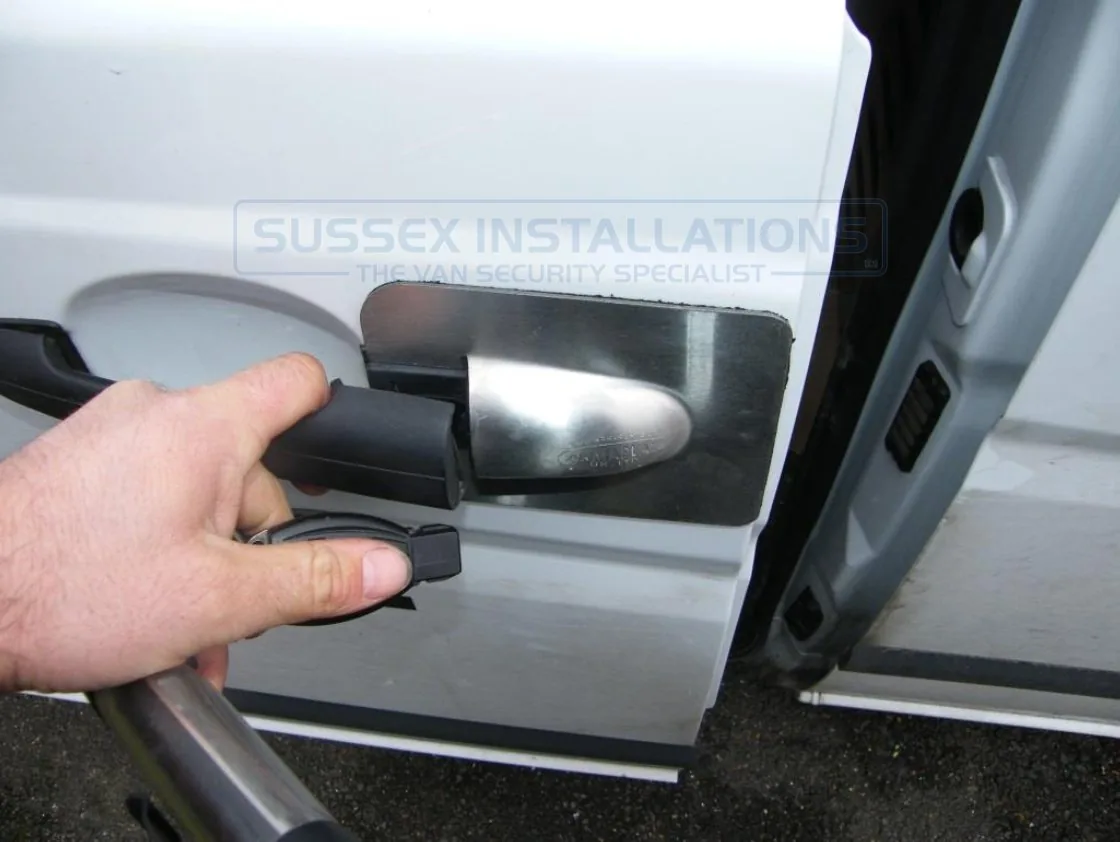
In 2014 Sussex Installation Team Ltd was carrying out security installations for four local Rossetts commercial-vehicle dealerships. Because I was responsible for the standard of the work completed by my staff, I wrote our own Mercedes Vito Armaplate installation document. I could not responsibly leave each installer to guess how the product should be fitted or where the known risks were.
That experience helped establish principles I still use today: consistent terminology, clear photographs, warnings beside the relevant step, repeatable measurements and enough detail that an installer does not have to interpret a tiny low-resolution image while working inside a door.
View the original Mercedes Vito Armaplate fitting instructions (PDF) →
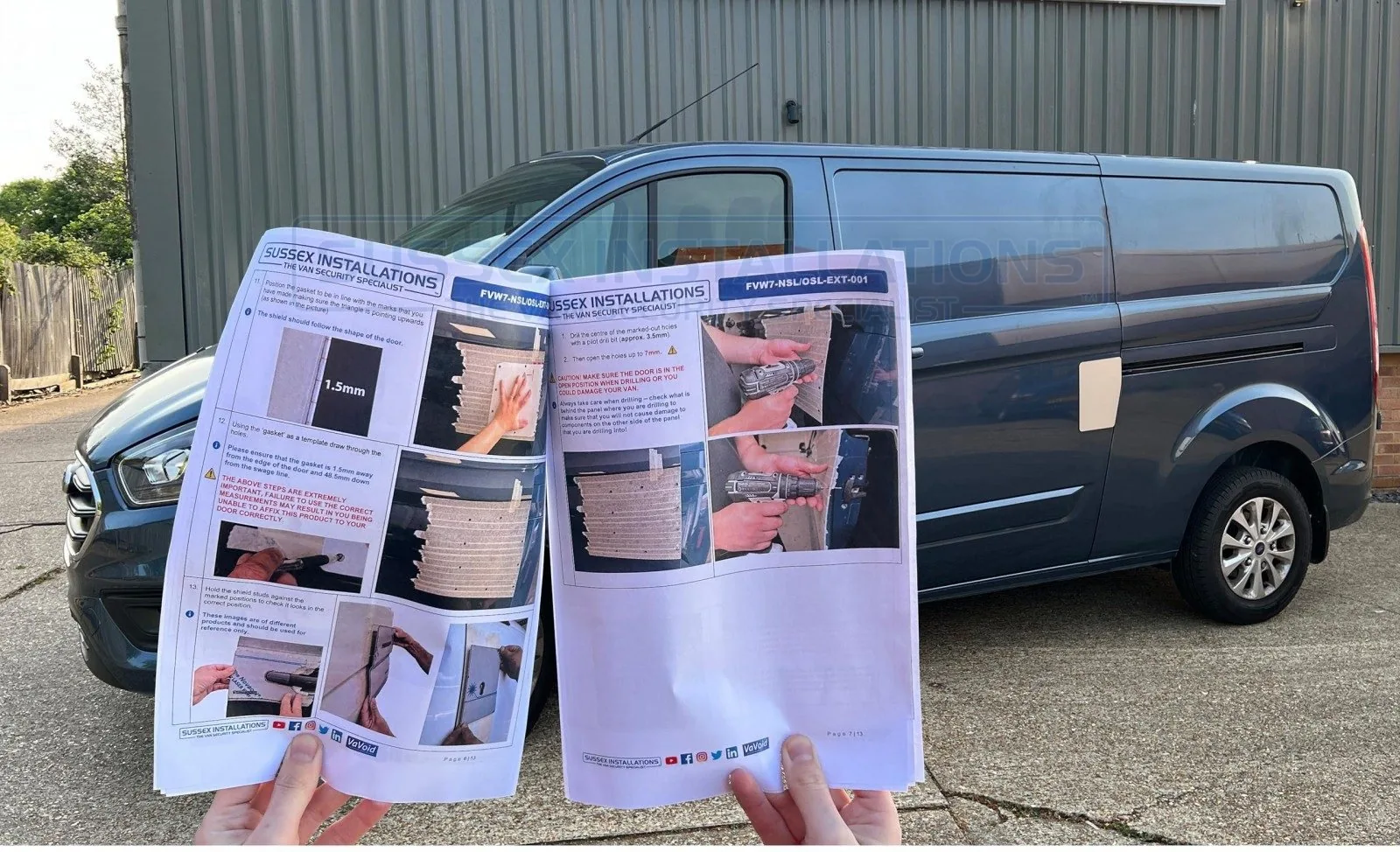
The original Sussex Installations shields shared some basic characteristics with Armaplate: an external stainless-steel plate, welded studs and through-body fixings. But the shortcomings I had observed pushed me towards a different approach. Products should match current attack methods, be easier to install accurately, avoid unnecessary risks to vehicle components and be supplied with comprehensive instructions.
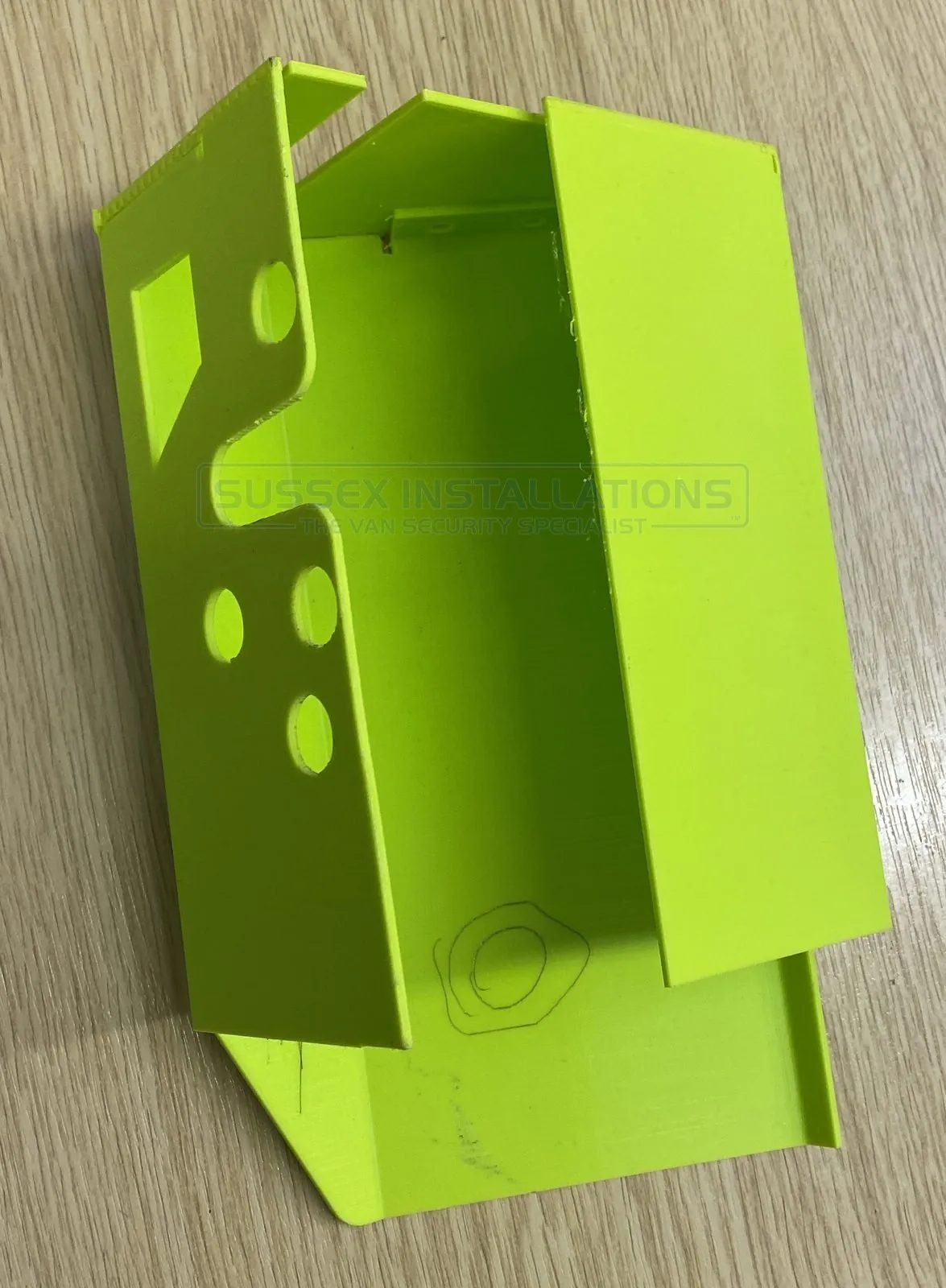
When thieves began making holes directly through thin door skins to attack the latch, the answer was no longer another handle shield. That gap helped push me into CAD, prototyping and eventually manufacturing internal and external latch-protection products. It also led to the later separation of visible OG Shields and concealed Stealth Shields as compatible but independent security layers.
A product should not be fitted because a fleet, installer or customer recognises its name. It should be fitted because its design addresses the attack relevant to that particular door and vehicle. Product design, installation method, instructions and real-world security value are all parts of the same product.
A product should not be fitted because a fleet, installer or customer recognises its name.
These extracts are from genuine five-star Google reviews.
★★★★★"The team at Sussex Installations did an amazing job fitting deadlocks and Armaplates to my Kangoo. I'm incredibly pleased with the results."
Kallum · Google review, December 2021
★★★★★"Sussex Installations did a great job installing T series deadlocks, Armaplate sentinel handle guards and a Catloc on my nearly new Mercedes Vito."
John · Google review, August 2015
★★★★★"Amazing the knowledge these guys and gal have, and their work is second to none. Very trustworthy, which is the main thing with security installs."
Stuart · Google review, January 2018
Review wording has been lightly shortened for display without changing its meaning. Full reviews remain available on the Sussex Installations Google Business Profile.
The Armaplate Sentinel handle shields that have been referred to in this document have now been discontinued by the manufacturer and are generally not available to purchase anymore. I do believe that there are still Armaplate immobiliser products available, but I do not know if it is connected to the same Armaplate (UK) Ltd company or have any direct experience to comment on it.
Armaplate added real value on vehicles such as the Mercedes Sprinter from 1996 to 2017 and Mercedes Vito models before 2015, where thieves commonly forced a screwdriver between the door handle and the bodywork to reach the locking mechanism.
Attacks moved on. Ford Transit Custom and Transit MK8 vans began being attacked through the driver's door barrel, and thieves then progressed to attacking the latch directly, sometimes nowhere near the handle. A handle shield fitted out of habit no longer addressed where the real risk was.
Some stud positions sat very close to the edge of the plate, wiring or internal handle components, leaving little tolerance for error and no vehicle-specific instructions to guide installers. Those lessons directly shaped how Sussex Installations designs and documents its own shields today.

An early explanation of the different jobs performed by independent locks and protection around a manufacturer's vulnerable locking area.
Open video and transcript →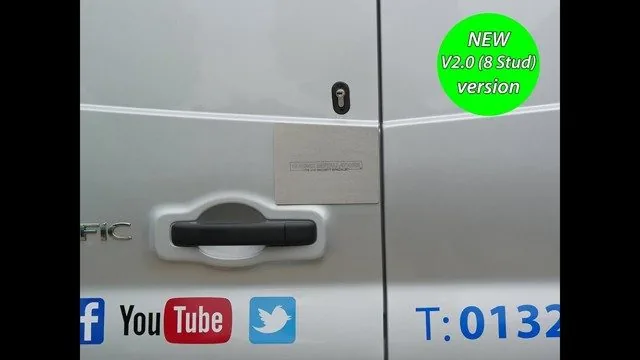
The move from protecting the handle area to protecting the actual latch and the route used by tools through the door skin.
Open video and transcript →
A practical fitting video documenting the realities of installing bolt-on reinforcement, and the lessons that later influenced safer fixing positions and clearer instructions.
Open video and transcript →
A real customer's handle-area break-in repaired and reinforced with Armaplate, with deadlocks fitted to every door for overnight security.
Open video and transcript →