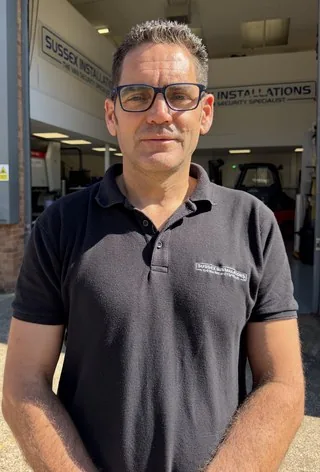
When I began specialising in van security, I quickly realised that fitting deadlocks professionally was not simply about buying the lock kits. The quality of the finished installation depended just as much on the tools, equipment and working practices used to fit them.
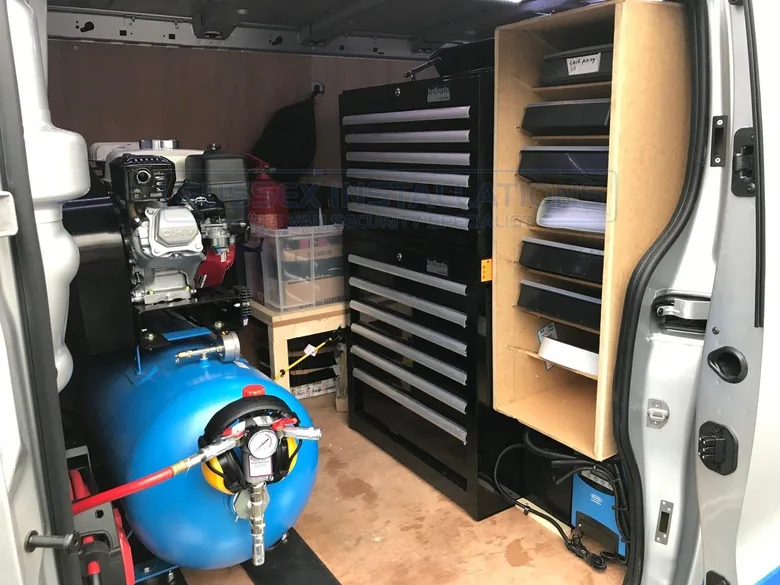
Over the years, Sussex Installations operated around seven dedicated mobile workshop van setups, with a maximum of three in use at any one time for our three full-time installers. The vans changed over the years, but the principle stayed the same: our installers needed to be able to achieve workshop-quality standards while working at a customer’s premises.
The challenge facing mobile installers
One of the biggest practical challenges for mobile installers has always been carrying the equipment needed to fit locks to a consistently high standard.
Many installers do not fit enough deadlocks or slamlocks to feel that a petrol compressor is worth the cost and space. Some prefer to use a smaller van, an everyday car or a vehicle that also serves another purpose. Others would rather convert their van for leisure use than dedicate a large part of it to workshop equipment.
Those choices are understandable, but because van security became our specialist business rather than an occasional service, we chose to invest differently.
Why the compressor became central to the mobile workshop
The compressor was important from the beginning because it powered the air saw, which was nimble enough to cut accurately in the confined spaces found inside double-skinned van doors.
However, cutting was only half of the reason for carrying compressed air. The compressor also powered the blow gun used to remove swarf and debris from the vehicle after drilling and cutting. For me, that clean-down was just as important as producing the opening for the lock itself.
Over the years I have heard installers say that they tell the customer to jet-wash the van afterwards, or that they carry a small can of compressed air for the clean-down. Neither approach has ever been enough for the standard I wanted Sussex Installations to achieve.
Battery tools changed the cutting, but not the clean-down
Modern battery cutting tools are now far better than they were when I bought my first petrol compressor. Compact reciprocating saws and other battery-powered tools can now perform many of the cutting jobs that previously required an air saw.
Ironically, this makes it even less likely that installers will invest in a compressor, because they no longer need compressed air to power the cutting tool. In my opinion, that does not remove the need for compressed air during the clean-down.
The vehicle still needs to be cleared of metal filings and debris from around the handles, inside the door, along the door shuts and across the surrounding bodywork. The cutting technology may have changed, but the corrosion risk caused by poor clean-down has not.
The prepared mobile installer challenge
A prepared installer needs more than a lock kit and a drill. The vehicle, tools, measuring equipment, cutting equipment, corrosion protection, clean-down equipment, spare consumables and parts all have to be carried, maintained and organised.
That investment takes space, money and discipline. It is one of the reasons why two installers can fit the same lock product but achieve very different long-term results.
For Sussex Installations, the mobile workshop was not simply transport. It was part of the installation standard.
Evidence of long-term investment
Why this matters
Looking back over almost two decades, I believe one of the biggest differences between our installations and many others has never been the lock itself. It has been the willingness to invest in the tools, equipment and working practices needed to fit those locks consistently and professionally.
The deadlock or slamlock is one part of the installation. The installation standard is what protects the vehicle for years afterwards.
The installation standard is what protects the vehicle for years afterwards.
Related videos and evidence
What customers say
These extracts are from genuine five-star Google reviews.
★★★★★"Tony was like a machine! It was raining, it didn't put him off at all! He was a total expert, and an absolute pleasure to deal with."
Helen Adams · Google review, April 2023
★★★★★"Danny did a great job and was clean and tidy working at my client's house whilst I was at work."
Tim Crispin · Google review, May 2019
★★★★★"They did an excellent job, a credit to your company, they were very polite, explained the job to me, showed me how the locks work and how to maintain them."
Darren Roberts · Google review, November 2020
Review wording has been lightly shortened for display without changing its meaning. Full reviews remain available on the Sussex Installations Google Business Profile.
Common questions
How many mobile workshop vans has Sussex Installations operated?
Around seven dedicated mobile workshop van setups over the years, with a maximum of three in use at any one time for our three full-time installers, each built to achieve workshop-quality standards while working at a customer's premises.
Why is a compressor still essential now that battery tools can do the cutting?
Because compressed air also powers the blow gun used for the clean-down, removing swarf and debris from around handles, inside the door, along the door shuts and across the bodywork. Battery tools reduced the need for air-powered cutting, but they did not remove the corrosion risk caused by a poor clean-down.
What was the Prepared Mobile Installer Challenge?
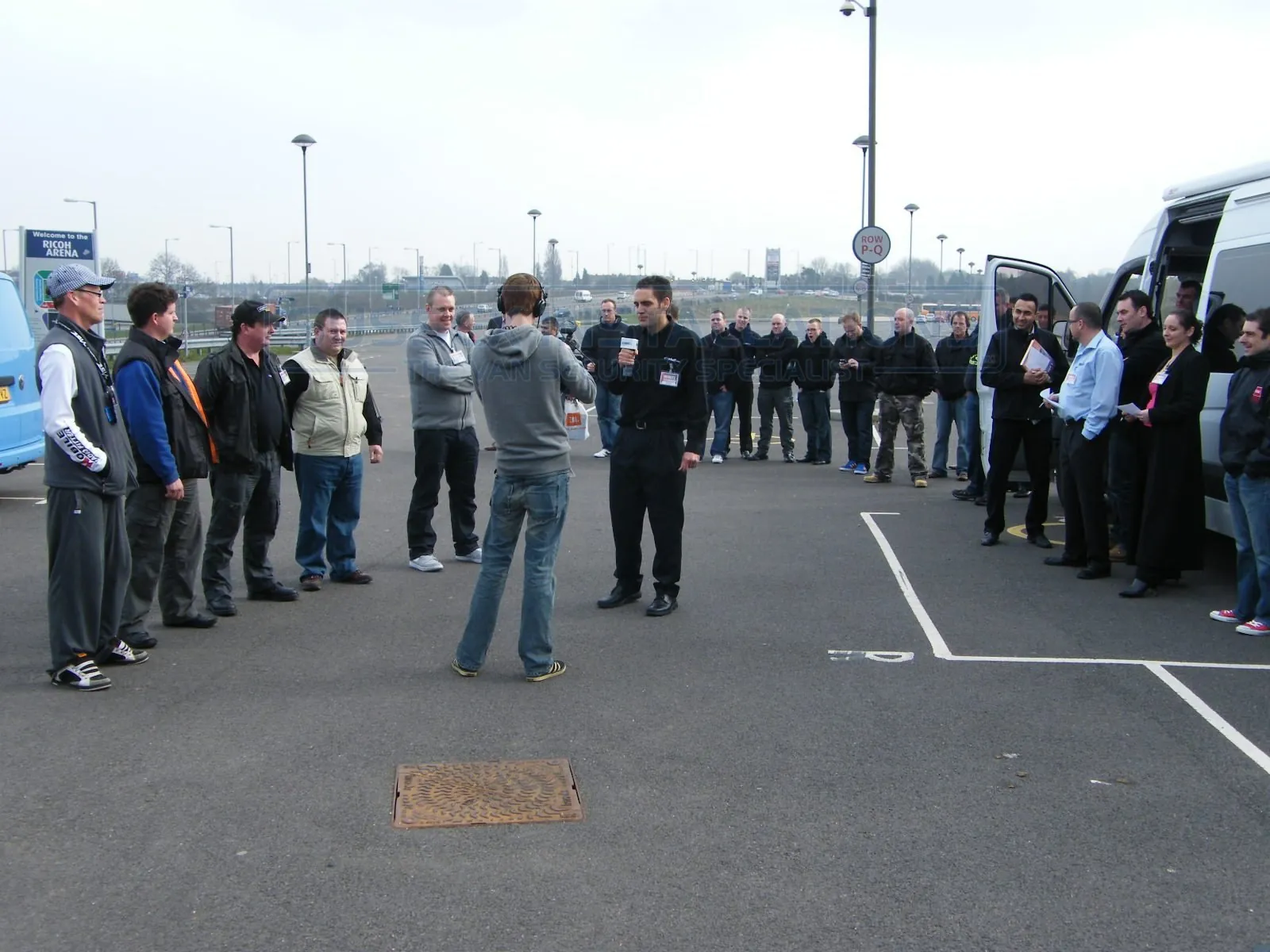
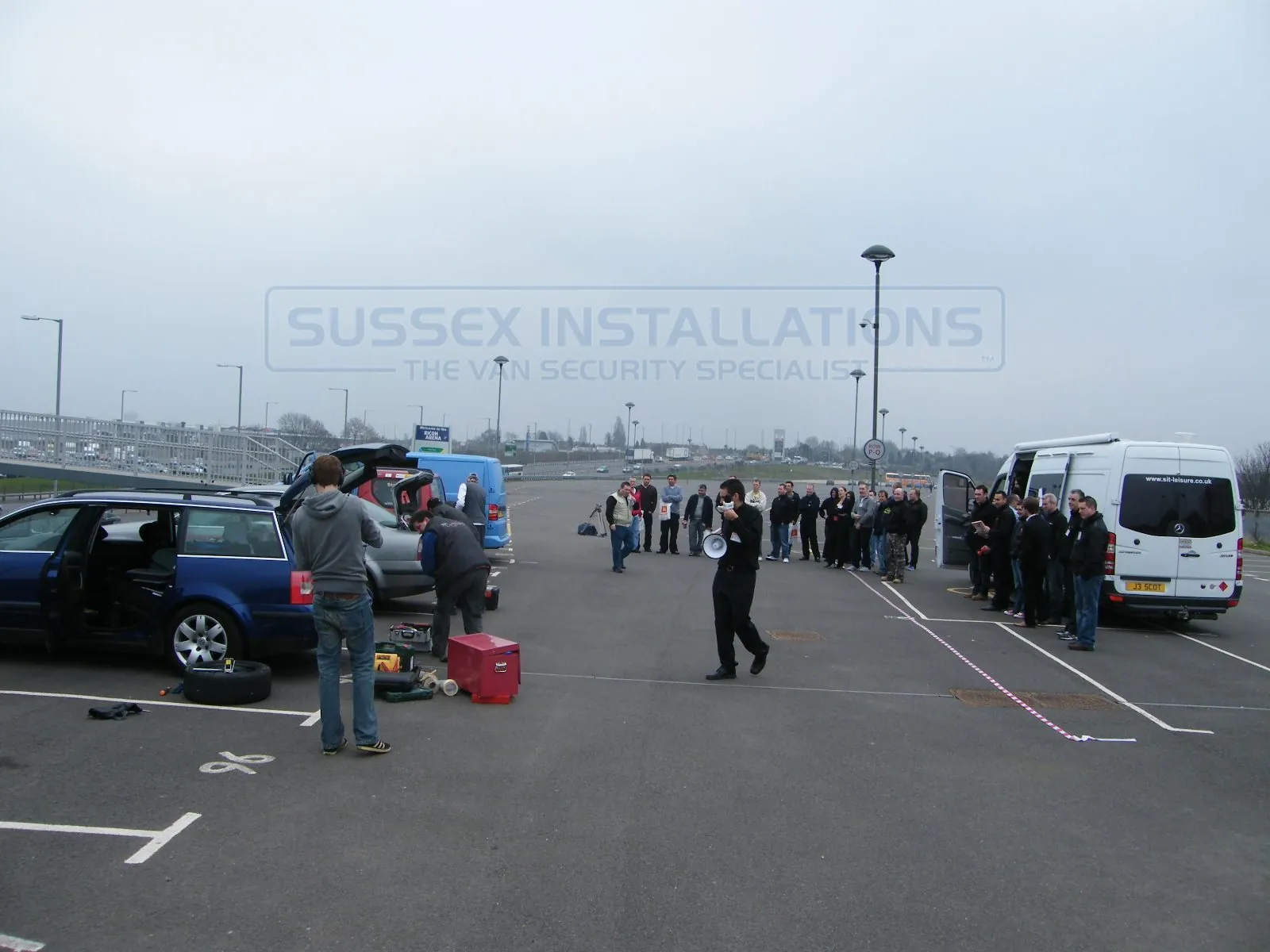
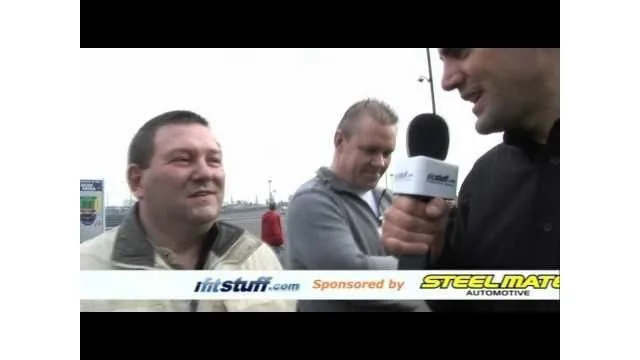
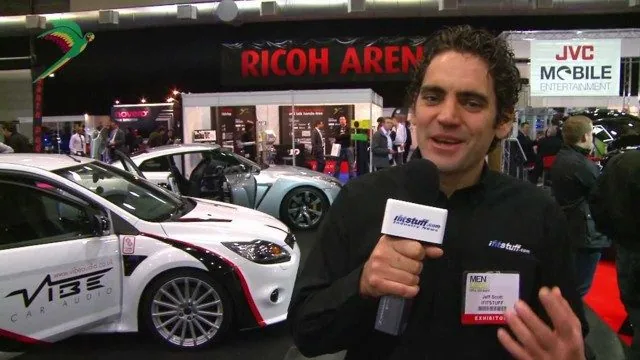
An event held at the Ifitstuff TV shows at the Ricoh Arena in 2011 and 2012 that encouraged installers to think about preparation, vehicle organisation and the full range of tools and equipment needed to work professionally as a mobile installer.
Page details
- Author
- Jeff Scott
- Publisher
- Sussex Installation Team Ltd
- Updated
- 2026-08-27
- Primary focus
- Professional installation standards