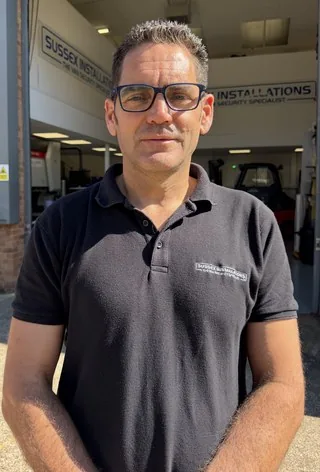
0:00 -Manufacturers taking security more seriously. Rupert: The main thing has got to be manufacturers taking security more seriously.
0:09 -What can you do if you catch a thief?. Jeff: If a tradesman catches a thief breaking into their van, it seems like there's no win situation. It's all in the moment and happening very quickly. What can a tradesman do in that situation? Rupert: There are numerous things to do. First of all, nearly all of us have got a phone. If they [unclear], take a photo. If you can [unclear] them off, don't touch your van. There might be fingerprints on it, and that goes for all sorts of forensic evidence. If you phone the police and say he's only just left, there is a chance, if they've got a police car nearby, that they might be able to pick him up. If you can say he's wearing a blue hoodie and yellow trousers, there is a chance. So speed is of the essence. Phone the police straight away, give them all the information you possibly can, and then don't touch anything until they turn up. Realistically they may not turn up until the following day, depending on what emergencies they've got. But call the police, preserve the evidence, call it in straight away.
1:09 -Confrontation and the risks to tradespeople. Jeff: Some thieves are so brazen they're standing there warning off the tradesman with a hammer or tools in their hand, and they just carry on breaking into the van. If a tradesman is looking at someone attacking his livelihood, most of the comments were that people want to jump in. Rupert: Really they're putting themselves at risk of being physically harmed, and also of being prosecuted for assault. When I was a little boy, it was just expected that, if someone [unclear], that's not allowed any longer. So the thing is, take a step back and call the police. They'll hear you calling the police, and because they're professional thieves, most of them, they know what the police response times are in that sort of area, whether it's 5 minutes or 20 minutes. They're not going to hang about. They are going to leave, and that gives you the opportunity to secure your property. But call the police straight away, and don't touch anything, because when the police arrive they will want to see if there's any information they can get from the van.
2:31 -Questions about restraint. Jeff: Is there a level of restraint that the tradesman is able to use? Is there anything he is [unclear, possibly “allowed”] to do before he's crossing a line and being prosecuted? Rupert: Well, I'm not an expert on this. Certainly you can lock somebody in a shed or something like that, but it is something that I'm afraid everyone listening will have to follow up on, because I don't know the answer. But restraint yes, assault no.
3:03 -Why does police response vary?. Jeff: From traders we speak to there's a varied police response. Some people say only a crime reference number has been issued. Other people have a forensic investigation. What's the reason for the inconsistency? Rupert: Every police force has different priorities on this. All of them prioritise threat to life, and that's quite right. Below that, every police force has different priorities, and it also depends how busy the police are at the time. If they've got a police officer spare to come, they'll send them. If they're dealing with punch-ups at pubs, they won't. From the public point of view I know it's really frustrating. A lot of it comes down to how busy the police are, but also their different priorities. You can get that information from your local Police and Crime Commissioner. Every police force does it differently, and very often that's in reaction to what's going on on their patch. In our area, the big complaint from the public is about e-scooters, so we're putting more resources into dealing with e-scooters. In previous years it was shoplifting, so we put the main resources into that. So, as I was saying earlier at this event, complain: write to your Police and Crime Commissioner, write to your Chief Constable. They do react to what the public are telling them. The more you write, the more likely they are to do something.
4:49 -Why is van tool theft such a problem?. Jeff: Van crime, van breaking and tool theft is such a massive problem at the moment. What are the reasons? Rupert: Because it's easy for the criminals to do, basically. I think the van companies have got a lot that they can do. They can make their vans a lot more secure. But tradespeople themselves can also take action to make their vans secure and to make sure tools aren't left in the van overnight. That doesn't help if your van doors are broken open, because you still have to repair your van, but it does mean you don't suffer other loss.
5:30 -Tool marking and lessons from farming. Rupert: This reminds me of the farming situation about six years ago. It was all the same sorts of complaints: the tractors are easy to steal, and the equipment is never recovered. Farming has come a long way since then. The manufacturers are making equipment more difficult to steal, and farmers are marking their equipment a lot more. In my area we have marking kits for tools, and we also have marking kits for agricultural equipment. The farmers are much better at taking them up. They come to us and say, I've just bought a new whatever it is, and we want to have the marking kit. Great. Tradespeople aren't doing that at the moment. We need to be more proactive going out, but there also needs to be a change in the trade. They need to be more proactive at getting their kit marked. We've got all the gear they need. You have to come to us and say, I've just bought some new kit and I need a kit to mark it.
6:34 -What would significantly reduce tool theft?. Jeff: If you could make a change that would make a significant difference to reducing van tool theft, what would it be? Rupert: I think the main thing has got to be manufacturers taking security more seriously. There are all sorts of things that I can do and all sorts of things that tradespeople can do, but effectively that's just trying to suppress the problem. It's not actually solving the problem. The real answer lies with van manufacturers. Of course, that's going to make their vans more expensive. If one manufacturer makes their vans really secure, the retail cost might be £3,000 more than somebody else's, so it's difficult, but I think it's got to be done.
7:19 -Does better security just move the problem elsewhere?. Jeff: We spoke today about the problem just shifting. If one manufacturer made their van secure, the problem would go to the next van manufacturer. Rupert: Yes, that's right. But I don't take displacement as an argument not to do anything. When I was trying to get my police force to go to car boot sales to crack down on this, they said we'd just displace it [unclear]. That's not an excuse to do nothing. You've got to take every step you can. Nothing is going to solve the problem overnight, but if you can take 5% here and 6% there and 10% somewhere else, you've got to do all of it, and then cumulatively it will build up, and soon it's not a major problem any longer.
8:10 -More from the conference. Jeff: I appreciate your efforts here, and I'm sure all the tradesmen do too. Please do give us a like for the video and subscribe to the channel, so I can keep you up to date with the latest in van security as things change. It's been 17 years already on YouTube on this channel about van security and I plan to keep going for at least another 17 years. Last thing to say, thanks for watching.
Transcript source: the YouTube auto-generated transcript, re-grouped by chapter with filler words removed and corrections to misheard words (for example "van manufacturers", "tradespeople", "Chief Constable" and "marking kits"). Passages that could not be understood are marked [unclear]. Views expressed are those of the speakers. Automated transcripts can contain recognition errors and should be checked against the original video.