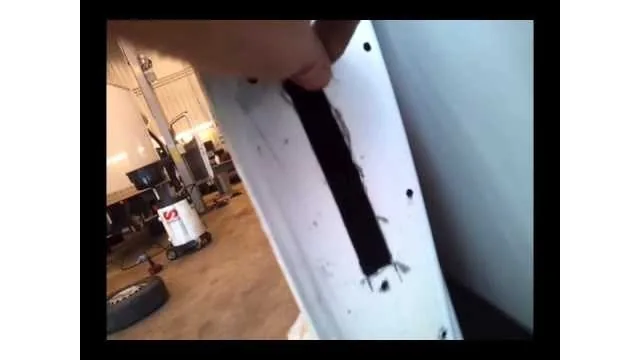
Protecting freshly cut steel after the vehicle has been cleaned.
★★★★★Rated 5.0 out of 5 from 365 Google reviews
After drilling and cutting, every exposed edge needs suitable protection before the lock is finally assembled.
Protecting exposed metal against corrosion
After the clean-down and before the locks are permanently fitted, every bare metal edge created during drilling or cutting should be protected with a rust inhibitor such as Waxoyl, cavity wax, primer or suitable paint.
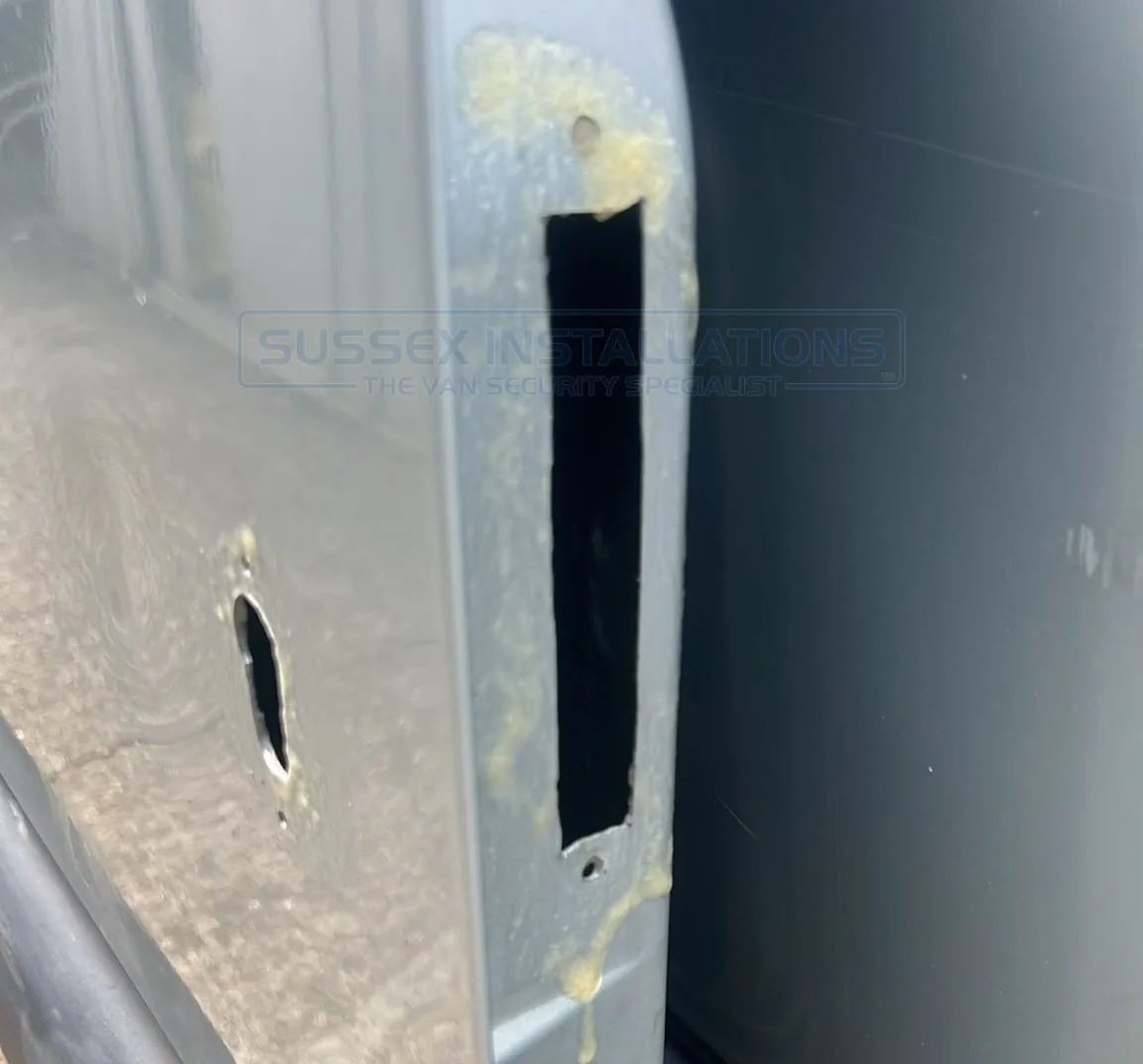
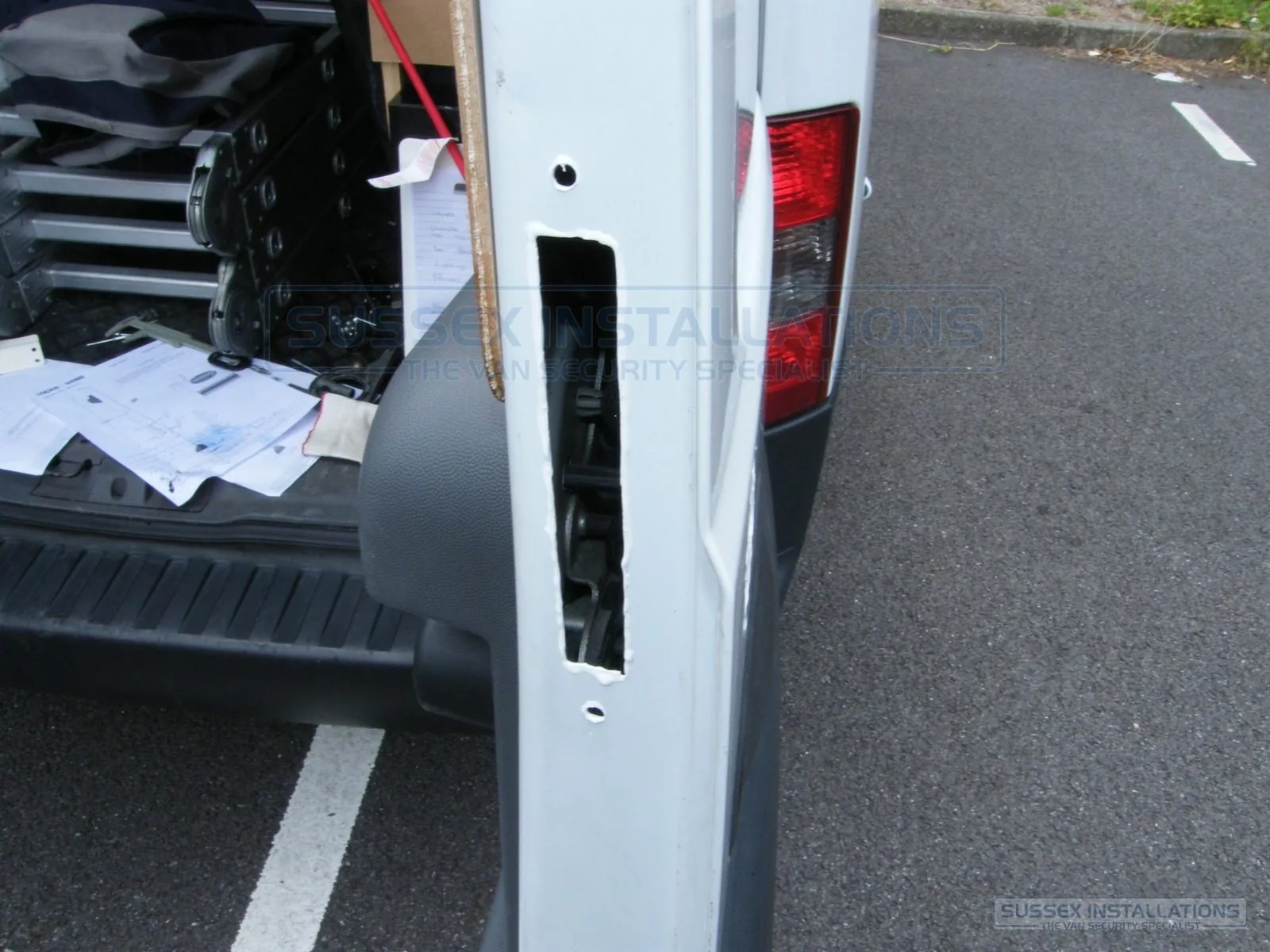
The cut apertures after cleaning and before final assembly.Wax corrosion inhibitor applied to newly exposed steel before the lock components cover the area.
This is the best opportunity to protect surfaces that may become difficult or impossible to reach after final assembly. The lock itself should not be relied upon to seal and protect the cut edge.
This is the best opportunity to protect surfaces that may become difficult or impossible to reach after final assembly. The lock itself should not be relied upon to seal and protect the cut edge.
Customers notice the rust protection
This extract is from a genuine five-star Google review describing exactly this stage of the fitting process.
★★★★★"Really went the extra mile with cleaning, sealing and lubricating all the cut parts of the door before fitting the locks to prevent corrosion." Edward Warrington · Google review, September 2026
★★★★★"Matt had also cleaned up some light surface rust on the door rail and a fair amount of small metal shavings which must have been the result of the window installation." Chris Adams · Google review, February 2022
★★★★★"They showed me how the locks work and how to maintain them, and even left me a lubricant to help me keep them in good condition." Darren Roberts · Google review, November 2020
Review wording has been lightly shortened for display without changing its meaning. Full reviews remain available on the Sussex Installations Google Business Profile.
Common questions
Why protect bare metal with a rust inhibitor before the locks are permanently fitted?
Every bare metal edge created during drilling or cutting needs protecting with a rust inhibitor such as Waxoyl, cavity wax, primer or suitable paint, because this is the best opportunity to protect surfaces that may become difficult or impossible to reach after final assembly.
Why shouldn't the lock itself be relied on to protect the cut edge?
The lock only covers the aperture; it does not seal or treat the bare metal beneath it, so any edge left untreated before final assembly stays vulnerable to corrosion for as long as the lock is fitted.
When should rust protection be applied relative to the clean-down?
After the clean-down and before the locks are permanently fitted, once every bare metal edge created during drilling or cutting has been cleared of swarf and is ready to be treated.
Jeff Scott — Van Security Specialist and Industry Educator
Jeff Scott is the founder of Sussex Installation Team Ltd (Sussex Installations). He has fitted vehicle-security systems since 1997, started Sussex Installations in 2003 and has specialised in van security since 2008. His work combines installation, vulnerability research, product design, UK manufacturing and long-term public education.
In 2009, Jeff published the first known YouTube video explaining mechanical key-operated van deadlocks. He has continued documenting van-security products, installation standards, vehicle vulnerabilities and changing attack methods ever since – earning his description as "The OG Van Security YouTuber."
Jeff has supported thousands of professional vehicle aftermarket technicians across the UK and beyond with access to technical information, while actively promoting higher quality installation standards through his trade community ifitstuff.com since 2006.
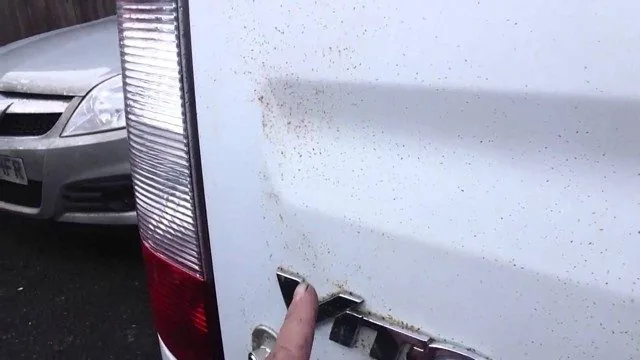
A real example of metal filings left on painted bodywork, showing why swarf removal and corrosion protection are essential parts of professional fitting.
VAN DEADLOCK FITTING - THE IMPORTANCE OF THE CLEAN DOWN - NO RUST
Here we show what effort we put into doing a quality installation, we go further than most would in order to keep the rust away from your van body work!